When the Selfie Became Selfish
Related Episode
When the Selfie Became SelfishI’ve been thinking about selfies lately. Not in the way you might expect—not as some grumpy old photographer complaining about phones and social media. No, it’s more nuanced than that. The selfie itself was never the villain in this story. In fact, it started as something rather innocent.
The first selfie simply said, “I was here.” It was a memory. A way of sharing an experience with family and friends back home. There’s nothing wrong with that. I’ve taken photographs of myself while travelling. Most of us have. It’s a natural impulse—to mark a moment, to prove we showed up, to say I experienced this.
But somewhere along the line, something changed.
When “I Was Here” Became “Look at Me”
The selfie stopped saying I was here and started saying look at me. Then it changed again. The place stopped being the destination; it became the backdrop. The culture became the prop. The people became extras in someone else’s story, and the experience—that precious, irreplaceable experience—became content.
That’s when I noticed something shifting, not just in the world, but particularly in places like Bali.
Bali didn’t change. We did.
Search for Bali today and you’ll find an endless stream of influencer videos, “must visit” lists, perfect photo locations, choreographed poses, and articles about visa crackdowns on content creators. That’s become the conversation. Not the people. Not the ceremonies. Not the artisans who’ve perfected their craft over generations. Not the quiet moments that make Bali unlike anywhere else on earth. Instead, we’ve become obsessed with proving we were somewhere, rather than understanding why the place actually mattered.
Photography Begins Long Before the Camera
I’ve spent most of my life with a camera in my hands. Newspapers, weddings, sport, commercial work, the streets of countries across the world. And one thing has become clearer to me than anything else: photography begins long before the camera comes up.
It begins by looking. By listening. By waiting. By allowing a place to reveal itself to you.
Some of my favourite photographs happened because I spent twenty minutes talking with someone before I even lifted the camera. Sometimes I never took a photo at all. The conversation was enough. The connection was the story.
That’s what worries me today. Not photography itself, not storytelling—but the industrialisation of content.
We’ve built an entire industry around producing images that prove we travel. We’re no longer sure we’re actually travelling anymore. We’re producing. We’re collecting content. We’re collecting validation. And places like Bali are paying the price for it.
The Rules Have Changed
For years, you could travel respectfully. You could immerse yourself in another culture, make thoughtful photographs, come home, and tell stories about what you experienced. Today, that’s not always enough.
If your work promotes your business. If it generates commercial value. If your photographs or films become part of your livelihood—you’re now expected to enter under a different visa. Why? Because too many people blurred the line between being a traveller and running a business. The actions of a minority changed the experience for everyone.
I don’t blame Bali for protecting its culture. If anything, I understand it completely. When enough people turn sacred places into studios, when ceremonies become backdrops, when local communities become unpaid actors in someone else’s content, eventually those communities push back.
And they should.
A Culture Shouldn’t Feed Someone Else’s Algorithm
A culture should never exist simply to feed somebody else’s algorithm.
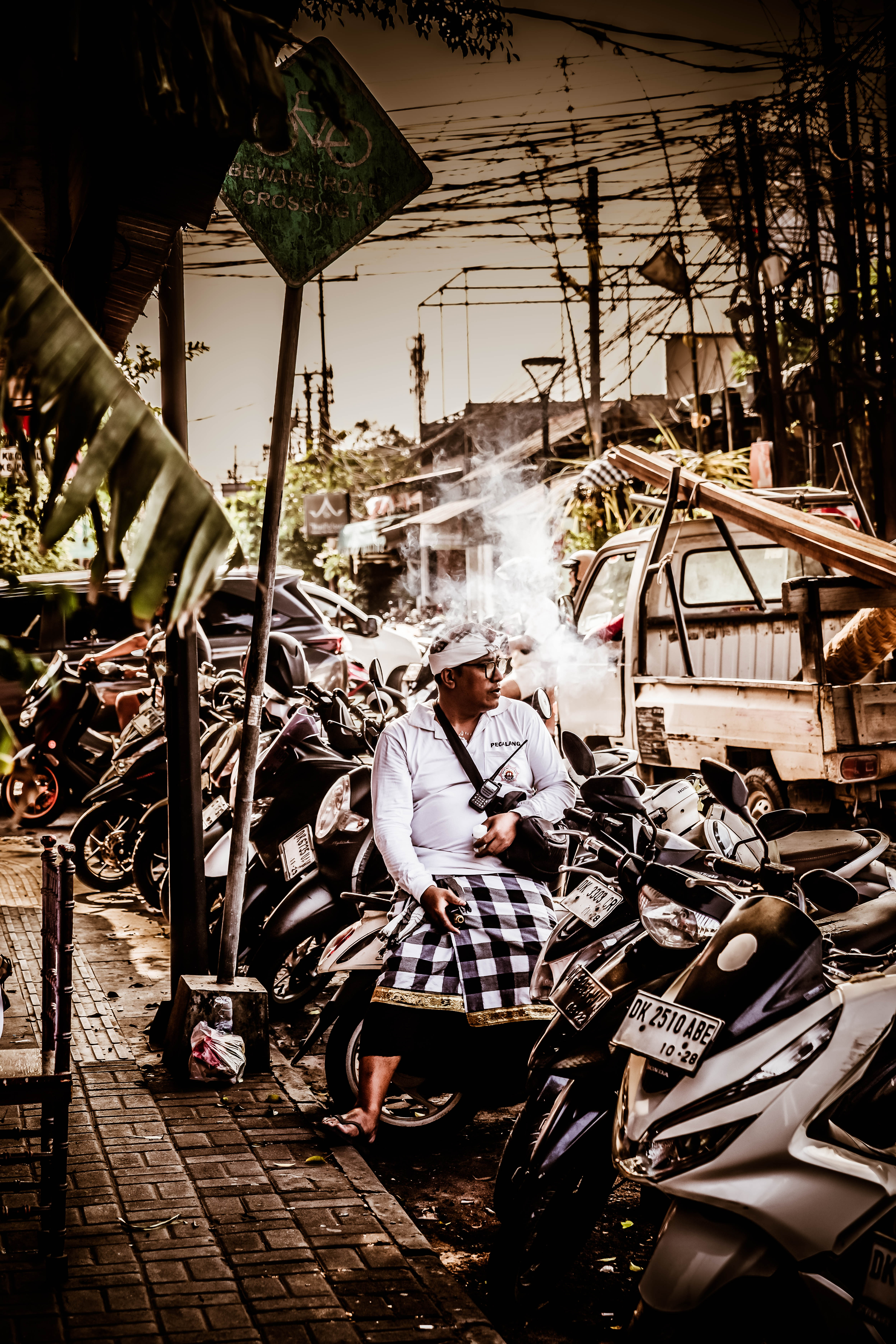
When I walk through Bali, I’m usually out before sunrise. Not because I’m chasing the light—though the light is certainly there—but because that’s when Bali belongs to itself. The scooters haven’t really started. The cafes are still asleep. The tourists are still in bed. Then almost without fail, you’ll see someone carrying offerings. No camera crew. No audience. No performance. Just another ordinary morning that has probably happened every morning for generations.
And that’s the thing: to them, it isn’t extraordinary. It’s Tuesday.
I hear the musicians preparing for ceremony. I watch families dressed in white walking quietly through the streets. I see generations continuing traditions that existed long before I arrived and will continue long after I’ve gone. Those are the moments I want to remember. Those are the stories worth telling.
Those photographs aren’t about me. They’re about Bali.
The Question That Matters
Perhaps that’s the difference. The humble selfie became selfish the moment we stopped asking, “What can I learn from this place?” and started asking, “What can this place do for my content?”
Maybe that’s the question every traveller should ask before they press the shutter. Not, “Will this photograph get attention?” but rather, “Does this photograph honour the place I’m standing in?”
Because when content becomes more important than culture, we’ve stopped travelling. We’ve simply started collecting ourselves in front of the world.
See with Purpose. Share with Heart.
If this resonates with you—if you’ve felt that tension between experiencing a place and documenting it—I’d love for you to hear the full conversation. There’s more depth to explore here, more stories from Bali, and more thoughts on what it means to travel with intention in a world obsessed with content.
Listen to the full episode of As I See It now and discover the photographs from Bali that inspired this reflection.